Killing the “Cold Spots” in Glass Annealing
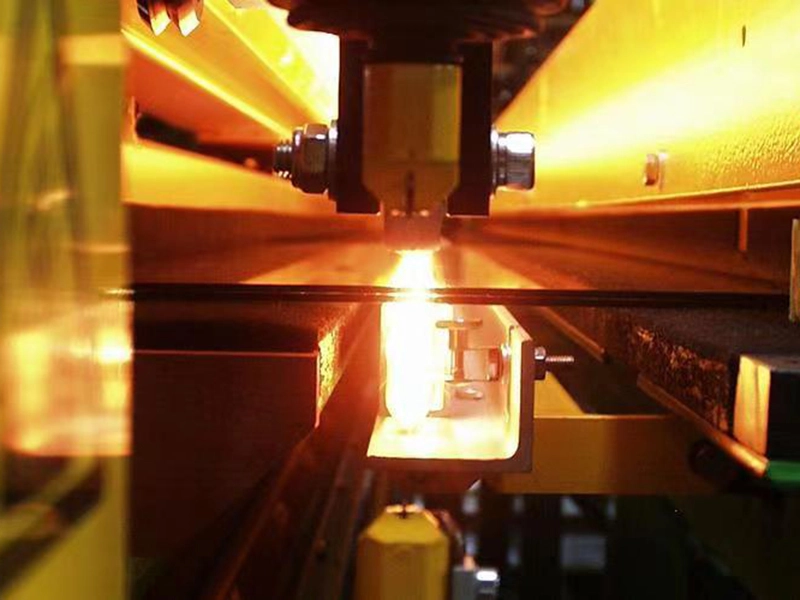
If you’ve ever run a bending heater for tempered glass or some complex glassware, you know the nightmare of cold spots. It’s frustrating. You’re using a standard convection oven, but because air just doesn’t like to move around tight curves or weird shapes, you end up with uneven heat. Then comes the sound every glassworker hates: that sharp crack. Uneven stress, shattered piece, wasted time. We deal with this by switching to shortwave infrared (IR) lamps. Why IR actually works Think of it this way: hot air has to travel, but IR radiation just hits. It doesn’t need a medium to carry it; it goes straight for the glass. By setting up quartz halogen lamps in a multi-angle array, you can basically “aim” the heat at the exact spots a traditional kiln misses. We lean toward high power density here. You want that glass to hit its softening point fast, but you don’t want to accidentally melt your surrounding frame in the process. The gear and the trade-offs Most of our setups run on high-wattage quartz tubes with R7s or SK15 bases. Why? Because when a bulb pops, you want to swap it out in seconds, not hours. We also use coated emitters. This shifts the wavelength so the heat actually sinks into the thickness of the glass instead of just scorching the surface. But here’s the catch: watch your voltage. If you’re wiring up a long row of 230V or 400V lamps, even a tiny dip in power creates visible temperature gradients. It’s subtle, but it’s there. Make sure your transformers can handle that initial “kick” when the lamps first roar to life. Making it work in the shop If you’re working on a complex vessel, don’t just throw one heat source at it and hope for the best. Try a staggered lamp configuration. By overlapping the radiation patterns, you effectively kill those dead zones. It just works better. One last thing—and this is important—high-density IR puts a massive strain on your cooling fans. If your enclosure isn’t vented properly, the ambient heat will just bake your wiring and kill your lamps early. Get your airflow right first. Then turn on the heat.