
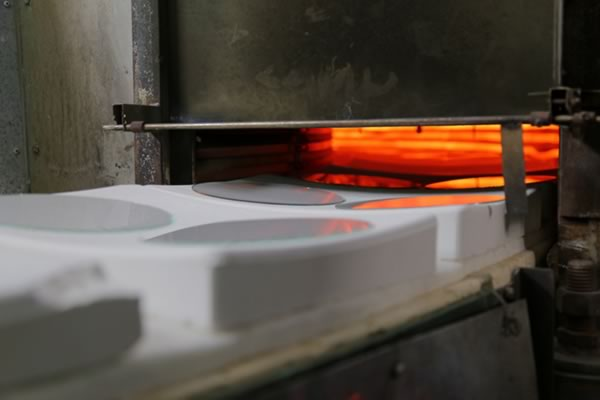
Stop Your Glass From Cracking: The Secret to Fast Tempering
When you’re tempering glassware, you’re basically playing a high-stakes game of “how fast is too fast?” If you take your time heating the glass, you’re just wasting money and time. But if you crank it up too quickly or hit it with uneven heat?**Crack.**There goes your piece. To get this right, we rely on shortwave infrared lamps. But the real unsung hero here is the SK15 ceramic holder.
Why the SK15 actually matters
Here’s the thing: if you try to push high wattage through a shortwave tube using cheap plastic or low-grade holders, they’ll just melt. It’s that simple. We use SK15 ceramics because they can actually handle the brutal heat soaking off the ends of the lamps. Plus, the fit is tight. You don’t get those annoying loose contacts that cause arcing when you’re ramping the power up and down. Loose contacts lead to hot spots. Hot spots burn out your lamps. It’s a headache you just don’t need.
Managing the heat flux
To keep glass from shattering under thermal shock, your controller has to be lightning-fast. Shortwave lamps are great because they react way faster than your typical resistive heating elements. When you pair them with a high-temp ceramic base, you can spike the heat to hit that tempering sweet spot and then drop it instantly to nail the cooling curve. It’s all about that precision.
The trade-offs (The “Real World” stuff)
Now, it’s not all magic. High-density infrared heating puts a massive strain on your wiring. Even though the SK15 holder won’t melt, the housing around it is still going to get hot. You’ve got to make sure your airflow and cooling fans are up to the task, or you’ll end up cooking your own electronics. And a word of caution: if you over-drive your lamps just to shave a few seconds off your cycle, you’re going to kill your filaments faster. It’s a balancing act between how many pieces you can push through and how often you want to be replacing lamps. If you want the best results, wire everything into an SCR (Silicon Controlled Rectifier). It gives you the kind of control you need to hit the transition temperature without turning your glassware into a pile of shards.