

Stopping Glass from Shattering on the Inspection Line
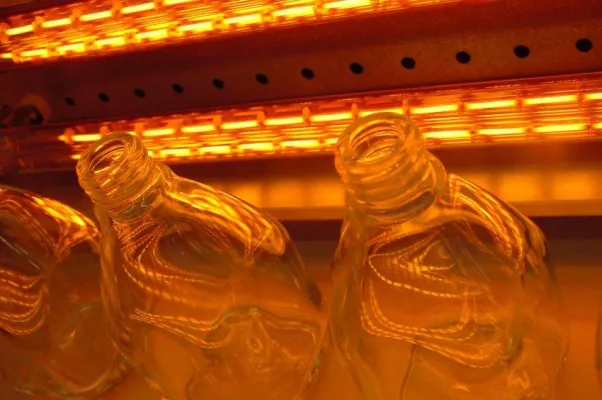
Ever seen a glass container just… snap? It happens. You’ve got a huge temperature difference between your product and the air in the plant, and the glass can’t handle the shock. It fractures instantly. To stop that, we use short-wave infrared (IR) heating lamps. The trick is to get the surface temperature up fast—almost instantly—so you don’t get those nasty stress cracks, but without cooking the core of the glass.
The Secret is Speed
You can’t just slowly warm the glass up. That doesn’t work. You need a system that hits hard and fast. We use Thyristor or SCR controllers because they can tweak the power in milliseconds. It’s basically a precise burst of energy. If your lamps are sluggish, the glass cools down too much between stations, and you end up with “cold spots” that lead straight to a break. It has to be snappy.
The Gear You Actually Need
We stick with halogen-filled quartz tubes. Why? Because quartz can take a beating. It handles those wild heat cycles without warping or giving up. We also go with short-wave radiation because it actually sinks into the glass rather than just bouncing off the surface. But a word of warning: keep a close eye on your voltage and wattage. A high-wattage tube gives you the heat you need, but it’s a beast on your wiring. If you’re pushing 2000W or more per lamp, make sure your contactors can handle that initial surge of power. Otherwise, you’re just asking for a blown fuse.
The Trade-offs (The Messy Part)
Here’s the thing: these lamps put out a ton of waste heat. While the radiant energy is doing its job on the glass, the rest of that heat is just hanging out inside your machine housing. If you don’t set up a forced-air cooling system for the reflectors, the housing is going to bake. You’ll end up frying your electronics or killing your lamps way sooner than you should. And for the love of everything, use high-temp leads. Standard PVC wiring will melt the second those lamps hit full power. Trust me on that one.