

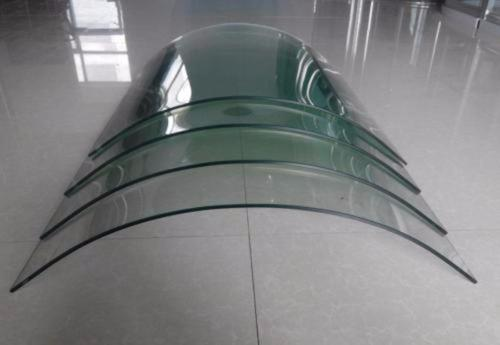
On the glass line, heat isn’t just a number on a gauge—it’s control. The moment your lehr profile starts to drift, you know it. You see optical distortion show up on bent windshields, edge cracks pop on tempered lites, and adhesion go sideways on laminated assemblies. Switch to electric glass lehr heating with infrared, and you take that control back.
What matters, technically
Infrared electric heating lays down a uniform thermal field across the glass surface, so you don’t get hot and cold spots that drive thermal stress. The response is fast: the lehr hits setpoint quickly and recovers fast after door openings or a line interruption. Because the radiation is directional, you concentrate energy where it needs to be—on the glass—instead of dumping heat onto fixtures and conveyor parts. In day-to-day terms, that means tighter temperature uniformity, profiles you can run again and again, and output that stays stable even when your line speed is pushing the lehr hard.
Why it fits the work we do
Whether you’re tempering, bending, laminating (EVA/SGP/PVB), drying coatings, or sealing insulating glass, consistent heat distribution keeps bow and warp inside tolerance and cuts down rejects caused by uneven heating. Rapid response shortens ramp-up, so changeovers move faster and throughput goes up without trading away quality. And because the energy goes straight into the glass, operating cost per square meter often drops compared with convection-heavy systems—especially in electric-only plants. You end up with fewer stress fractures, stronger adhesion in the laminated stack, and a more stable annealing curve for insulating glass.
The details you can’t skip
Infrared electric lehrs are sensitive to line-of-sight and emissivity. Dark or reflective coatings change absorption, so when your product mix shifts, the profile usually needs a tweak. Installation has to be done right: proper clearance and reflector alignment to keep uniformity, and stable voltage to keep output consistent. Plan your spare module strategy up front—match connectors and mounting footprints to your OEM lehr. That way, when something fails, downtime is measured in minutes, not shifts.