
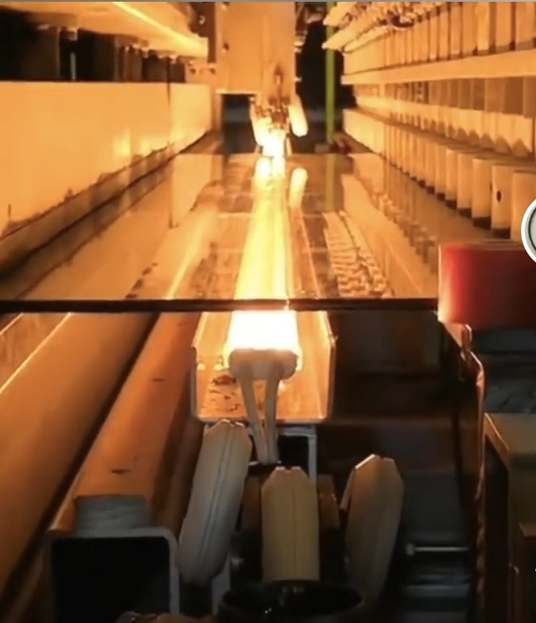
On the line, sealant adhesion falls apart when heat is a guess. Under-cured beads from sloppy profiles, and overshoot that pushes bubbles into the bond. The fallout is scrap, rework, and a line that stalls just to chase temperature. We built a sealant adhesion infrared lamp to replace that guesswork with repeatable, measured heat. The unit is a short-wave infrared (NIR) quartz emitter, tuned for fast, localized energy. It comes up to full power in seconds, so you hit the sealant activation window without soaking the glass or heating up the frame around it. The beam profile gives you uniform coverage along the bead path, and that matters: uneven thermal fields drive differential expansion and open the door to micro-cracks. We size the lamp to fit your process window—230 V or 460 V, compact lengths for tight hoods, and terminals that can take the vibration of a conveyor line. This lamp earns its keep wherever heat has to be on point: bending preheat, tempering preheat, lamination curing, and coating drying. On bending, it gets the glass to forming temperature quickly and evenly, so the shape holds without wrinkles. In tempering, it shortens the preheat phase and stabilizes the entry condition, helping keep break patterns consistent. In lamination, it drives the adhesive to the right green strength faster, so press time drops and optical clarity improves. For coating drying, it pulls out solvent without overheating the substrate, so haze stays low and throughput stays up. Installation is simple—mount, wire, aim. But alignment is the make-or-break detail. The lamp has to run parallel to the glass surface; otherwise you get hot spots and shadowing. You’ll want to tune height and power density to match your sealant chemistry and line speed. Too hot, and you scorch the organics. Too cool, and adhesion becomes a gamble. Set it once with thermocouples, then lock the parameters.