
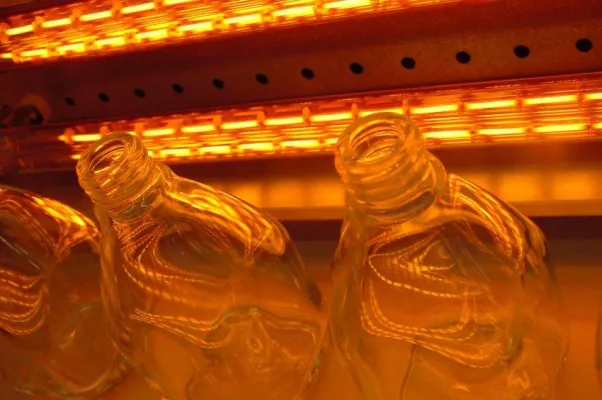
Getting silk-screen drying to play nice with the tempering process is all about finding that “sweet spot” with your heat. If you go too hard and too fast, your ink patterns start to blur—which is a nightmare. But if you’re too timid with the heat, the ink won’t actually bond before it hits the furnace. That’s how you end up with peeling and poor adhesion. The trick to the heat To fix this, we use shortwave infrared (IR) lamps. Think of it as a shortcut. Instead of heating up the entire slab of glass, the radiation dives straight into the coating to target the solvents. It stops that “bleeding” look you usually get with convection ovens. You can tweak the wattage and the distance to get the heat just right. Sure, high-wattage lamps let you speed up the line, but you’ve got to time your conveyor perfectly. You want the ink cured, but you don’t want to mess with the glass’s structural integrity. The gear side of things Not all lamps are created equal. We stick with high-purity quartz tubing and specific filament coatings because they can handle the stress of being switched on and off constantly. Since these lines are usually tight, the lamps need a small footprint to fit into the pre-heating zone. One thing to watch out for? Voltage drops. If your power dips over a long run, you’ll get “cold spots,” and your patterns will look uneven. The reality check Here’s the trade-off: everyone wants lightning-fast curing, but pushing your lamps to the limit kills them faster. If you run them at max capacity to hit crazy throughput targets, expect to be replacing those tubes way more often. It’s a balancing act between speed and maintenance. And a pro tip—double-check your cooling fans. If they aren’t wired up right, the housings will warp under all that concentrated heat. And nobody wants to deal with that.