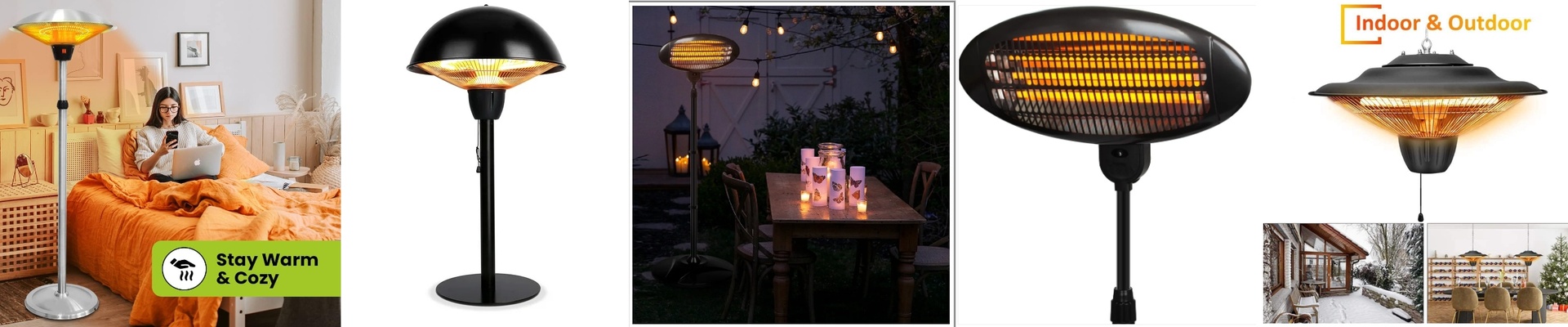
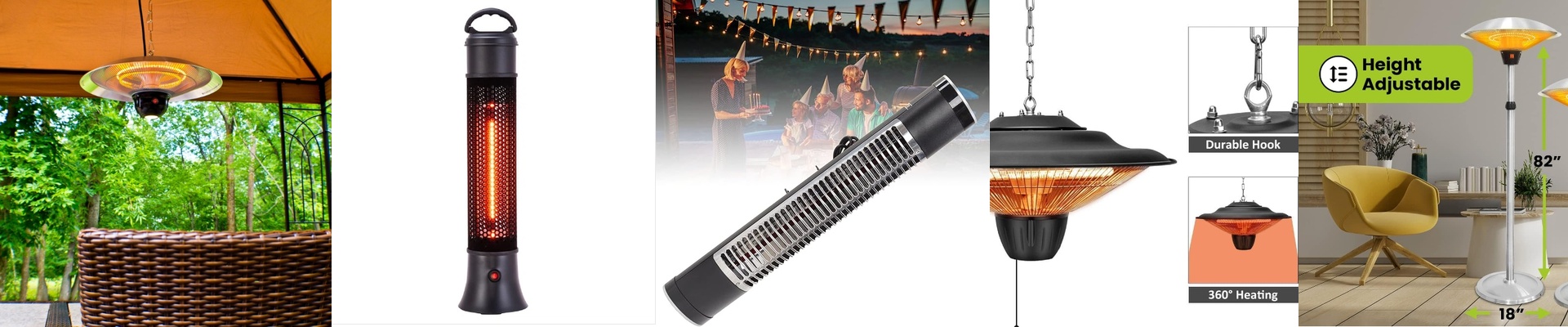
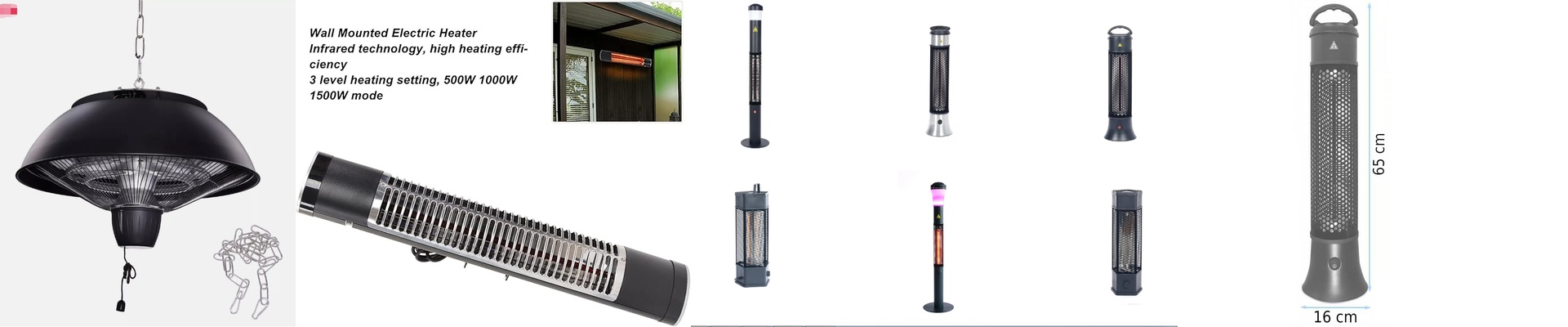
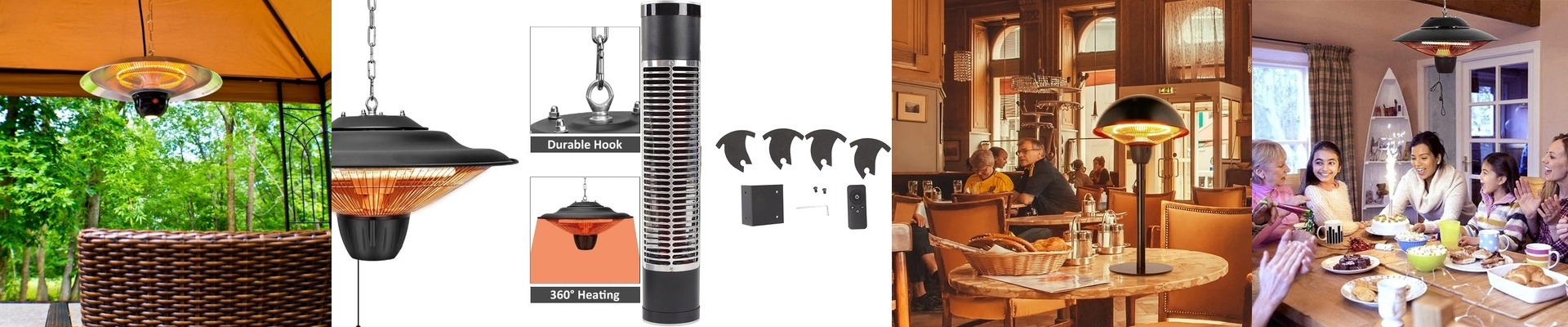
Cold evenings have a way of shrinking your outdoor room to a place you only pass through. Step outside, the air bites, and the conversation dies before it starts. The fix isn’t throwing on more layers—it’s heat that hits fast, lands where you sit, and holds steady without noise or glare.
What matters, under the hood
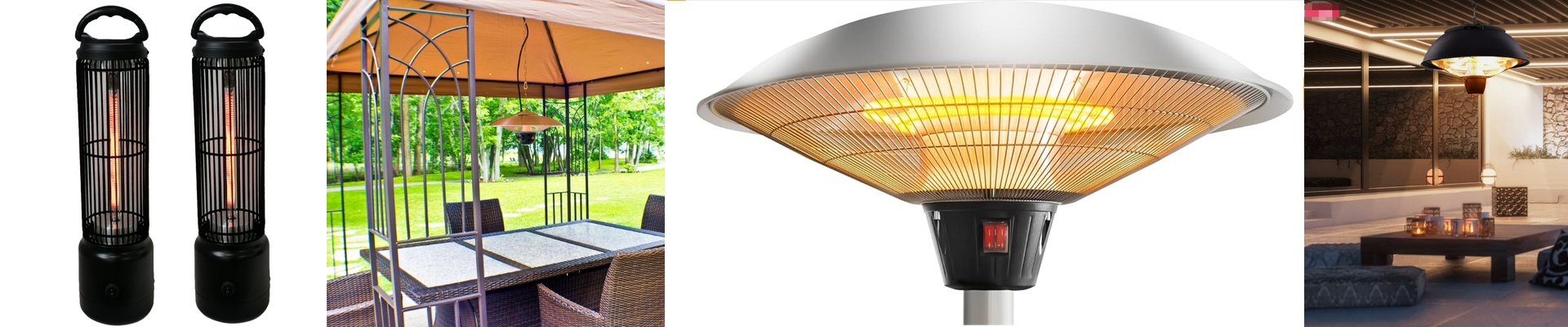
We built this electric heater around a carbon fiber infrared element, because it responds quickly and delivers even radiant heat. Switch it on, and you feel warmth spreading across about 15 square metres—no long warm-up, no waiting for air to catch up. At 1,500W, it keeps coverage consistent, and the built-in thermostat prevents that on-off swing between too hot and too cold. Safety here is practical, not a sales pitch. Tip-over protection shuts the unit off if it gets bumped off-level, and overheat protection cuts power if internal temps climb beyond set limits. For outdoor duty, the housing is IP55-rated to stand up to rain and dust, so it can live on a covered patio without turning into a maintenance headache.
Why this approach works outside
Outdoor living is about mood, and mood is temperature. With radiant warmth, you’re not just heating air—you’re warming people, furniture, and surfaces directly. That’s how you stretch the evening, keep meals relaxed, and keep guests comfortable even when the temperature drops. Because the heat is directional, you’re not wasting energy on empty space. For homeowners, that means more usable hours and less fuss. It starts fast, runs quietly, and doesn’t blow air around, so it won’t disturb table settings or stir up allergens. The warmth feels more like a cozy lamp—natural, not forced.
The practical bits you need
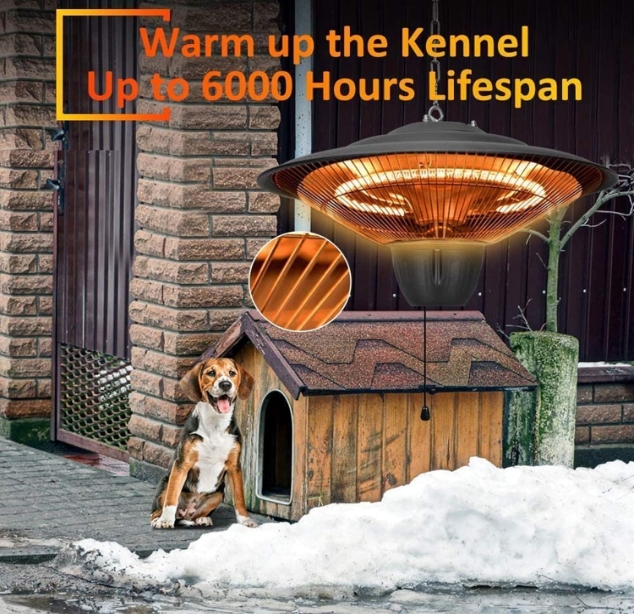
Radiant electric heaters do their best work when placed close to the area you want to warm—roughly 2–3 metres away, aimed at seating, not straight up. They’re built for covered outdoor areas; heavy rain or direct exposure to wind will cut effectiveness and can shorten service life. And because the warmth is focused, layout matters. Open, windy spaces feel less consistent than sheltered, enclosed patios. Plug it into a dedicated outlet on a circuit that isn’t already near capacity, and keep clearances clear. That one simple step helps prevent tripped breakers and keeps the heater running the way it was designed.